Posted by Broken Arrow Team on Jul 29th 2026
How to Choose the Right Trail Camera for Better Deer Intel
You check the SD card after two weeks in the field and find a handful of blurry hindquarters, a few empty triggers, and maybe one usable photo of a doe. Meanwhile, the buck you know is using that trail never shows up on camera at all. Most hunters blame the location. Learning how to choose a trail camera that actually matches the way deer move is usually the real fix, not another few yards to the left.
Trigger speed and detection range are not spec-sheet trivia. They determine whether your camera catches deer at all. A peer-reviewed study published in the journal Remote Sensing tracked deer activity patterns across hundreds of trail camera triggers and found a sharp bimodal crepuscular pattern, peaking hard at twilight and dropping to nearly nothing during midday hours.
When deer only show up in a narrow window, the camera you choose, specifically how fast it triggers and how far out it detects motion, decides whether that window gets captured or missed completely.
Why Most Trail Cameras Fail to Deliver Useful Deer Data
The instinct after a disappointing season of trail cam photos is to move the camera. Sometimes that helps. More often than not, the actual problem is sitting in your hand. A slow trigger speed misses deer that walk rather than linger. A weak detection range means a deer can pass ten feet outside the camera's cone and never register at all.
Poor night image quality turns every after-dark encounter into a gray blur you cannot identify. Battery failure during the exact week deer movement peaks wipes out data when it matters most.
Budget cameras get blamed the least and cause the most quiet failure, since they tend to fail in ways that look like bad luck rather than bad gear. A missed deer reads as a fluke. A dead battery reads as bad timing. Neither one gets traced back to the camera itself, so the same mismatched gear goes right back out for another season.
The Trail Camera Specs That Actually Impact Results
Trigger Speed Matters Most
Trigger speed decides whether a walking deer becomes a clean photo or a blurry rear leg disappearing out of frame. The difference matters most with fast-moving animals. A deer casually browsing near a food plot gives a slow camera time to catch up, but a deer moving briskly through a travel corridor does not wait around for a camera to wake up.
Detection Range
Detection range needs to match the terrain, not just the price tag. A wide-open food plot benefits from a longer range, catching deer before they're close enough to spook. A tight, brushy travel corridor works better with a shorter, tighter cone that avoids false triggers from swaying branches. Longer range is not automatically better; it depends entirely on what the camera is pointed at and how much clutter sits between the lens and the trail.
Image and Video Quality
Image and video quality matter most when you need to judge antler size, confirm a specific animal, or study exact travel timing. For a simple presence check, whether deer are using a trail at all, a lower-resolution capture does the job just as well and saves storage space in the process.
Battery Life
Battery life becomes a bigger factor than most hunters expect, especially as we head into the colder, shorter days of late season. Cold weather drains batteries faster than warm weather, so a battery that lasted all of September can fail by November under identical settings. Planning battery checks around the seasonal temperature drop, rather than a fixed calendar interval, keeps a camera running during the exact weeks it matters most.
Storage and Connectivity
Storage and connectivity round out the list, though the two work differently. SD card cameras store everything locally, so viewing photos means physically retrieving the card, fine for pre-season scouting where a weekly visit is no burden.
Cellular cameras send photos straight to your phone as they're captured, no retrieval trip required, at the cost of a data plan and a slightly higher price tag. The right call comes down to how often you're willing to walk in versus how much a live feed is worth to you.
Matching Trail Cameras to Your Hunting Strategy
Pre-Season Scouting
Pre-season scouting rewards long battery life and a wide detection zone, since the goal here is broad pattern recognition over several weeks rather than pinpoint precision on a single trail.
In-Season Monitoring
In-season monitoring flips those priorities. Fast trigger speed matters more once the season is underway, and cellular updates, if the budget allows, mean a missed check-in no longer costs a week of hunting days.
Public Land Hunting
Public land hunting adds layers that private land does not: camera theft and disturbance by other hunters. A compact, well-hidden setup matters as much as the specs inside it, since a stolen or vandalized camera captures nothing.
Private Land Management
Private land management benefits from running multiple cameras across a property to build a pattern over an entire season rather than relying on a single location to tell the whole story. More coverage points reveal how deer actually move between feeding, bedding, and travel areas.
Middle Georgia's mixed pine and hardwood terrain, bordered heavily by row-crop and pasture edges, adds its own wrinkle. Deer here move along timber lines bordering agricultural fields more than through deep, unbroken forest, so a camera aimed at a field-edge transition often outperforms one buried deep in the timber.
The region's humid, subtropical climate also puts real strain on battery life and camera housings, which is exactly why battery choice and weatherproofing deserve more attention here than they might in a drier climate.
Why Your Trail Camera Still Isn't Getting Deer Photos
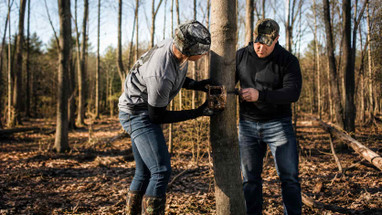
Sometimes the camera is right, and the setup is wrong. A camera facing east or west catches sun glare during the exact twilight hours deer are most active, washing out the one window that matters most. Mounted too high, a camera captures backs and shoulders instead of faces. Mounted too low, it catches nothing above the knee.
Monitoring a dead zone off to the side of an established trail wastes an entire season's data collection. Checking a camera too often adds human scent and disturbance, pushing deer away from the exact area you're trying to study, undermining the very setup that was working before you kept walking in on it.
Trail Camera Types Explained and Which One You Actually Need
Standard trail cameras remain the most budget-friendly option and suit hunters just getting into scouting or running several cameras across a larger property. Cellular trail cameras cost more upfront but deliver real-time updates, which matter most for remote land you cannot check often or for in-season monitoring, where daily changes affect your plan.
The Wise Eye MC-2 is a straightforward example, sending full HD photos and video to your phone over any available carrier network, with a fast enough trigger speed to catch deer moving through rather than just lingering ones. Wireless or WiFi cameras fill a narrower niche, useful at close range around a home property, but limited for deep-woods use where signal range becomes the bottleneck.
What to Avoid When Buying a Trail Camera
Choosing the cheapest option available almost always means accepting the slowest trigger speed on the market, which is the single spec most likely to cost you the photo you actually wanted. Overpaying for megapixels the average hunter will never need pulls budget away from the specs that matter more. Skipping a locking security box or cable mount is an easy afterthought that becomes a costly mistake fast on public land or anywhere a camera sits unattended for weeks.
Skipping battery cost planning leads to a camera that looks affordable until the replacement batteries add up over a season. Buying without a strategy, grabbing whatever's in stock instead of matching the camera to pre-season scouting, in-season monitoring, or a specific piece of land, wastes money on features that don't fit how the camera will actually be used.
Broken Arrow Outfitters Has Served Middle Georgia Hunters Since 2013
Broken Arrow Outfitters started in Perry, Georgia in 2013, when a group of local outdoorsmen decided to turn their own passion for hunting and fishing into a shop built for their community. Today the team includes hunters, competition archers, and veterans who understand Middle Georgia terrain firsthand, not just the spec sheet on the box.
That local knowledge shapes how we help hunters choose gear, including trail cameras, since the right setup for a Middle Georgia field edge is not always the same setup that works elsewhere. We carry trail cameras built to perform in the region's heat, humidity, and mixed terrain, not just cameras that look good in a catalog.
Ready to Stop Guessing and Start Tracking Real Deer Movement
The right trail camera turns a season of empty cards and blurry photos into a clear, usable picture of how deer are actually moving on your land. That starts with matching trigger speed, detection range, and battery life to your specific setup, not defaulting to whatever camera is cheapest or most heavily marketed.
Explore trail cameras built for real scouting conditions and browse the full hunting gear selection to round out your setup.